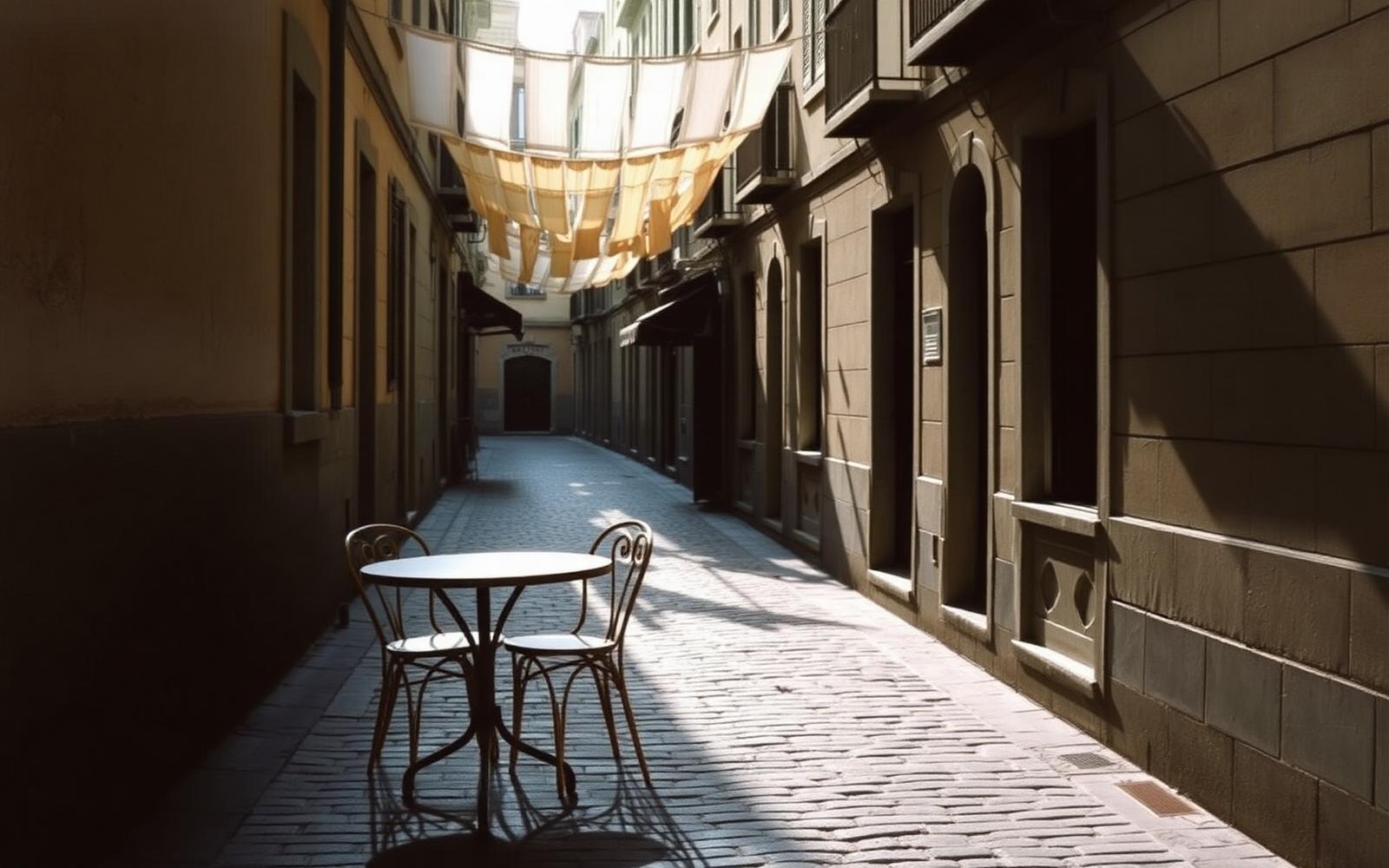
The Art of the Unhurried Trip
The richest travel days are often the least impressive on paper. Here is the case for staying long enough to notice where you are.
The short answer
Slow travel does not require a sabbatical. It means reducing transitions, staying long enough to develop a small routine, and leaving enough open time to respond to the place instead of only executing a plan.
At a glance
Core idea
Trade more stops for more depth
Works for
Trips as short as 4 days
Plan
One anchor plus open space each day
Result
Less transit, more attention
The day nothing happened
Ask someone about a favorite trip and the story often begins with a day that would not survive an itinerary review.
We missed the train. It rained, so we stayed. We went back to the same cafe. We met someone. We took the long way. We did not know the market was there.
The day looks unproductive on paper. In memory, it glows.
Travel has become unusually good at displaying its highlights. We see the viewpoint, the tasting menu, the perfect doorway, and the boat slicing across blue water. What we do not see is the pace that allowed the moment to register.
Movement has a hidden cost
Every additional stop creates a chain of small tasks: pack, check out, transfer, wait, navigate, check in, unpack, orient, find dinner. Even when everything works, the transition takes more of the day than the timetable admits.
It also takes attention. You are always preparing to leave or recovering from arrival. You learn just enough of a neighborhood to find the nearest coffee, then move on before it becomes yours in any small way.
A fast trip can be exhilarating when movement is the point. A rail journey, expedition, or road trip may earn every transition. The trouble is adding movement by default, as if more pins make a journey more valuable.
Slow travel is not a number of days
You do not need three months in one village to travel slowly. You can take an unhurried four-day city break.
Slow travel is a relationship to time. It means leaving enough margin to notice what a place is offering, and enough continuity for the second impression to replace the first.
It might mean staying in one neighborhood. Returning to a restaurant. Learning which bakery has the morning line. Taking public transit after you understand the route. Seeing the same square in rain and sun.
The shift is subtle but important. The destination stops being a backdrop and starts becoming a place.
Why the second visit changes everything
The first visit to a market is reconnaissance. You look at everything, understand very little, and worry that you are standing in someone’s way. The second time, you know where to enter. You recognize the fruit seller. You buy the thing you were too uncertain to ask about yesterday.
Repetition gets a bad reputation in travel because we associate it with home. But chosen repetition is how we move from consuming a place to participating in it, even briefly.
Return to the beach at a different hour. Walk the same street without looking at directions. Order another coffee from the person who now recognizes you. These are small experiences, but they build the feeling of being somewhere rather than passing through it.
How to plan a slower trip
An unhurried trip still benefits from structure. The trick is to make the structure lighter than the day.
Choose one anchor most days: a museum reservation, a hike, a cooking class, a table you really want. Give that anchor a generous amount of time and let the rest of the day gather around it.
Cluster plans by area. Crossing a city three times to satisfy a list is rarely worth it. Save places that do not fit for another day or another trip.
Protect one empty half-day. It will not stay empty. It will fill with weather, appetite, a recommendation, fatigue, or the desire to return somewhere. That is exactly the point.
- Stay at least 3 nights in a small city or island base
- Stay 4 to 5 nights in a major city before adding another region
- Avoid single-night stays unless the route truly requires one
- Schedule one main commitment per day
- Keep arrival day simple and departure day nearly empty
- Choose a walkable base that makes ordinary time enjoyable
The FOMO of it all
The hardest part of slower travel is not logistics. It is accepting what you will not see.
If you stay in Naxos for four nights, you may not get to Santorini. If you give Kyoto a full week, you may postpone Hiroshima. The loss is visible. The gain is harder to photograph: calm, familiarity, spontaneous choices, and memories with texture.
A good itinerary does not eliminate missing out. It chooses what is worth missing.
This is easier when you stop treating a trip as your one chance. You do not need to complete a country. You need to experience this particular journey well enough that it enlarges your appetite for the next one.
Leave before you are finished
There is a lovely tension in leaving a place with something still undone. A museum for next time. A trail you only heard about at dinner. A neighborhood you never reached.
Completion is not the goal. Connection is.
Stay long enough to become curious about the ordinary parts. Then leave with a reason to return.
Frequently asked questions
What is slow travel?
Slow travel prioritizes depth, local rhythm, and fewer transitions. It usually involves staying longer in fewer places, clustering plans, and leaving open time for rest and unplanned discovery.
Can I practice slow travel on a short vacation?
Yes. Choose one base for a four-day trip, stay in a walkable neighborhood, plan one anchor each day, and protect at least one open half-day.
How many nights should I stay in each destination?
Three nights is a useful minimum for smaller destinations, while four or five nights gives a major city more room. One-night stays are best reserved for necessary route connections.
Will fewer destinations make the trip boring?
Usually the opposite. Fewer transfers create time for neighborhoods, food, day trips, rest, and second visits. Variety can come from how you experience one place, not only from changing hotels.
There is more life out there
Planning a journey like this?
We will shape the stays, the tables and the rhythm of the days around you.
Start your journey